Buy blogsmap.eu ?
We are moving the project
blogsmap.eu .
Are you interested in purchasing the domain
blogsmap.eu ?
domain@kv-gmbh.de · 0541-91531010
Buy blogsmap.eu ?
When do you use "dont" in French?
"Dont" is used in French to indicate possession or to replace the preposition "de" followed by a noun. It is used when the noun being replaced is the object of the verb in the relative clause. For example, "La fille dont j'ai parlé" (The girl I talked about) or "Le livre dont tu as besoin" (The book you need). **
Is there a difference between dont and duquel?
Yes, there is a difference between "dont" and "duquel" in French. "Dont" is used to indicate possession or relationship and is equivalent to "whose" or "of which" in English. For example, "le livre dont je t'ai parlé" means "the book that I told you about." On the other hand, "duquel" is a relative pronoun that is used to refer to a specific noun with a preposition, such as "le livre duquel je t'ai parlé" meaning "the book about which I told you." So, while both words are used to introduce relative clauses, they are used in different contexts and have different meanings. **

Similar search terms for Dont
Top-Angebote
Products related to Dont:
-
Macmillan The Storyteller's Secret: From Ted Speakers To Business Legends Why Some Ideas Catch On And Others DontHow did a Venice Beach T-shirt vendor become television's most successful producer? How did an entrepreneur who started in a garage create the most iconic product launches in business history? How did a timid pastor's son overcome a paralyzing fear of public speaking to captivate sold-out crowds at Yankee Stadium; twice? How did a human rights attorney earn TED's longest standing ovation; and how did a Facebook executive launch a movement to encourage millions of women to 'lean in'? They told brilliant stories. In The Storyteller's Secret: From TED Speakers to Business Legends; Why Some Ideas Catch on and Others Don't; keynote speaker; bestselling author; and communication expert Carmine Gallo reveals the keys to telling powerful stories that inspire; motivate; educate; build brands; launch movements; and change lives. The New York Times has called a well-told story 'a strategic tool with irresistible power' - the proof lies in the success stories of 50 icons; leaders; and legends featured in The Storyteller's Secret: entrepreneurs like Richard Branson; Sara Blakely; Elon Musk; Steve Jobs; and Sheryl Sandberg; spellbinding speakers like Dr. Martin Luther King; Jr.; Bryan Stevenson; and Malala Yousafzai; and business leaders behind famous brands such as Starbucks; Southwest Airlines; Wynn Resorts; Whole Foods; and Pixar. Whether your goal is to educate; fundraise; inspire teams; build an award-winning culture; or to deliver memorable presentations; a story is your most valuable asset and your competitive advantage. In The Storyteller's Secret; Gallo explains why the brain is hardwired to love stories - especially rags-to-riches stories - and how the latest science can help you craft a persuasive narrative that wins hearts and minds. 'The art of storytelling can be used to drive change;' says billionaire entrepreneur Richard Branson. And since the next decade will see the most change our civilization has ever known; your story will radically transform your business; your life; and the lives of those you touch. Ideas that catch on are wrapped in story. Your story can change the world. Isn't it time you shared yours?4,95 £*Shipping: 1,99 £Secure redirect to the provider
-
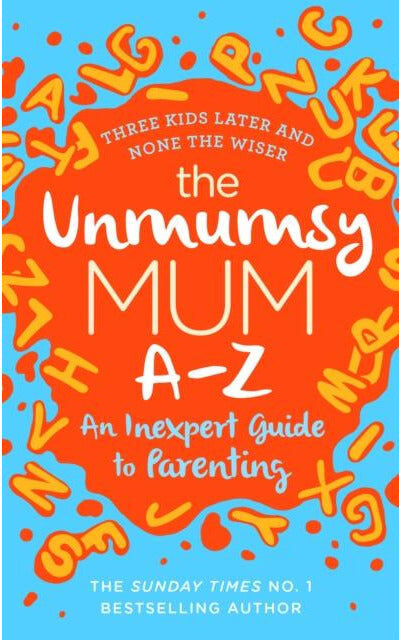
Transworld Publishers Ltd Books about parenting, The Unmumsy Mum A-Z - An Inexpert Guide to Parenting by Sarah Turner (Parenting Guide Book)From bestselling author and massively popular blogger The Unmumsy Mum comes this hilarious, irreverent and searingly candid compendium of parenting experiences. With entries including D is for Desperation, F is for Fish Fingers, S is for Supermum and V is for Vagina, it is safe to say this is not your average A-Z. This book wont tell you what sort of parent you should or should not be; instead, it offers a refreshingly honest account of what being a mum to three young children is really like and the surprising lessons that have been learned along the way. If you feel as though you are not measuring up or are struggling to cherish every moment, Sarah tales from the thick of it will reassure and resonate with you. Above all, her commitment to telling the truth, the whole truth and nothing but the truth will make you laugh out loud and remind you that you are, in fact, doing a great job. What readers are saying: For all parents out there, this is a must read. Absolutely hilarious and so true to life. 100 recommend. Makes me smile and actually keeps me sane as it is so easy to relate to. It made me laugh Sleeping through, it made me cry Xmas and it made me feel better about the times I think I am getting it wrong.1,99 £*Shipping: 1,99 £Secure redirect to the provider
-
Scribe UK No-Drama Discipline: the bestselling parenting guide to nurturing your child's developing mind (Mindful Parenting)The pioneering experts behind the bestselling The Whole-Brain Child now explore the ultimate child-raising challenge: discipline. A breakfast bowl gets thrown across the kitchen, splattering milk and cereal all over the wall. Or one of your kids threatens a younger sibling. Or you get a call from the headteacher’s office for the third time this month. What do you do? No-Drama Discipline provides an effective, compassionate road map for dealing with such tantrums, tensions, and tears – without causing a scene. Based on recent discoveries about the brain that give us deep insights into the children we care for, what they need, and how to discipline them in ways that foster optimal development, this book offers a ‘relational’ approach that builds on children’s innate desire to please their parents and get along well with others. Complete with candid stories and playful illustrations that bring the authors’ suggestions to life, No-Drama Discipline presents clear messages in a practical and inviting format. Using these techniques, you can discipline your children in a way that’s high on relationship-building, high on respect, and low on drama and conflict. As a result, your life as a parent will be easier, and your parenting will become more effective. And more importantly, you’ll create connections in your children’s brains to build emotional and social skills that will serve them now and throughout their entire life – all while strengthening your relationship with them.5,99 £*Shipping: 2,99 £Secure redirect to the provider
-
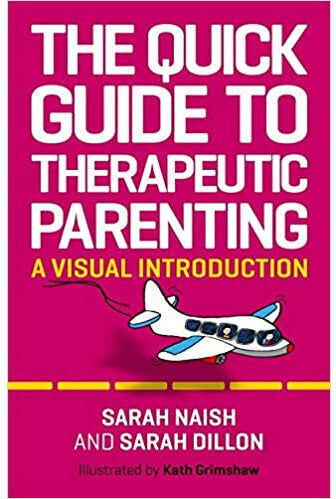
Jessica Kingsley Publishers The Quick Guide to Therapeutic Parenting: A Visual Introduction (Therapeutic Parenting Books) by Sarah NaishTherapeutic parenting is not your usual parenting style. It's a special, specific way to raise kids who have experienced trauma in their past, and requires a lot of commitment and determination - this is about far more than love and care.But where do you start?This book is the ideal first step for anyone who wants to understand how therapeutic parenting works. It offers simple summaries of the key ideas behind it, fully illustrated throughout with informative cartoons and graphics. Over 40 different issues are covered, from dysregulation and fear, to setting boundaries and parenting in the midst of trauma.The perfect introduction for new therapeutic parents, family members, teachers or other adults who need to help support you and your child, this Quick Guide will also be a source of inspiration for more experienced parents.13,20 £*Shipping: 2,99 £Secure redirect to the provider


-
Which French relative pronouns are there: lequel or dont?
The French relative pronouns "lequel" and "dont" both serve different purposes. "Lequel" is used to refer to a specific noun and has different forms depending on the gender and number of the noun it refers to. On the other hand, "dont" is used to indicate possession or to introduce a relative clause with verbs that require the preposition "de." Both pronouns are important for constructing complex sentences and adding specificity to the language. **
-
What is the difference between "dont" and "duquel" in French?
In French, "dont" and "duquel" are both relative pronouns used to introduce a clause that provides additional information about a noun. However, "dont" is used to replace "de + qui/que" and is used when the main verb requires the preposition "de." On the other hand, "duquel" is used to replace "de + lequel/laquelle/lesquels/lesquelles" and is used when the main verb requires the preposition "de" and the noun is masculine singular or plural. In summary, "dont" is used to replace "de + qui/que" and "duquel" is used to replace "de + lequel/laquelle/lesquels/lesquelles." **
-
Which of them (de laquelle, duquel or dont) is grammatically correct?
The correct choice depends on the gender and number of the noun it refers to. "De laquelle" is used for feminine singular nouns, "duquel" is used for masculine singular nouns, and "dont" is used for both masculine and feminine singular or plural nouns. It's important to match the relative pronoun with the noun it refers to in terms of gender and number. **
-
Can you help me with the French relative pronouns lequel and dont?
Of course! The relative pronoun "lequel" is used to refer to a previously mentioned noun and can be masculine, feminine, singular, or plural. It has different forms depending on the gender and number of the noun it refers to. On the other hand, "dont" is used to replace "de + noun" and is used to indicate possession or relationship. It is used to connect a main clause to a subordinate clause. I can provide more specific examples or help with any other questions you may have about these relative pronouns. **


When do we use ce qui, ce que, qui, que, dont, and lequel?
We use "ce qui" when the subject of the verb is unknown or unspecified. "Ce que" is used when the object of the verb is unknown or unspecified. "Qui" is used as the subject of the verb, while "que" is used as the direct object of the verb. "Dont" is used to indicate possession or relationship, and "lequel" is used to refer to a specific noun that has been previously mentioned. **
Do fashion designers have to travel?
Yes, fashion designers often have to travel for various reasons. They may need to attend fashion shows, visit fabric suppliers, meet with manufacturers, or seek inspiration from different cultures and locations. Traveling allows them to stay updated on the latest trends, connect with industry professionals, and gain new perspectives that can influence their designs. Overall, travel is an important aspect of a fashion designer's career. **
Top-Angebote
Products related to Dont:
-
HARPERCOLLINS Lifespan: Why We Age and Why We Dont Have ToLifespan - Why We Age and Why We Dont Have To Description In this paradigm-shifting book from acclaimed Harvard Medical School doctor and one of TIME magazine's 100 most influential people on earth; Dr. David Sinclair reveals that everything we think we know about ageing is wrong; and shares the surprising; scientifically-proven methods that can help readers live younger; longer. For decades; the medical community has looked to a variety of reasons for why we age; and the consensus is that no one dies of old age; they die of age-related diseases. That's because ageing is not a disease - it is inevitable. But what if everything you think you know about ageing is wrong?What if ageing is a disease? And that disease is curable. In LIFESPAN; Dr. David Sinclair; one of the world's foremost authorities on genetics and ageing; argues just that. He has dedicated his life's work to chasing more than a longer lifespan - he wants to enable people to live longer; healthier; and disease-free well into our hundreds. In this book; he reveals a bold new theory of ageing; one that pinpoints a root cause of ageing that lies in an ancient genetic survival circuit. This genetic trick - a circuit designed to halt reproduction in order to repair damage to the genome -has enabled earth's early microcosms to survive and evolve into more advanced organisms. But this same survival circuit is the reason we age: as genetic damage accumulates over our lifespans from UV rays; environmental toxins; and unhealthy diets; our genome is overwhelmed; causing gray hair; wrinkles; achy joints; heart issues; dementia; and; ultimately; death. But genes aren't our destiny; we have more control over them than we've been taught to believe. We can't change our DNA; but we can harness the power of the epigenome to realise the true potential of our genes. Drawing on his cutting-edge findings at the forefront of medical research; Dr. Sinclair will provide a scientifically-proven roadmap to reverse the genetic clock by activating our vitality genes; so we can live younger longer. Readers will discover how a few simple lifestyle changes - like intermittent fasting; avoiding too much animal protein; limiting sugar; avoiding x-rays; exercising with the right intensity; and even trying cold therapy - can activate our vitality genes. Dr. Sinclair ends the book with a look to the near future; exploring what the world might look like - and what will need to change - when we are all living well to 120 or more. Dr. Sinclair takes what we have long accepted as the limits of human potential and mortality and turns them into choices. THE EVOLUTION OF AGEING is destined to be the biggest book on genes; biology; and longevity of this decade.7,95 £*Shipping: 2,99 £Secure redirect to the provider
-
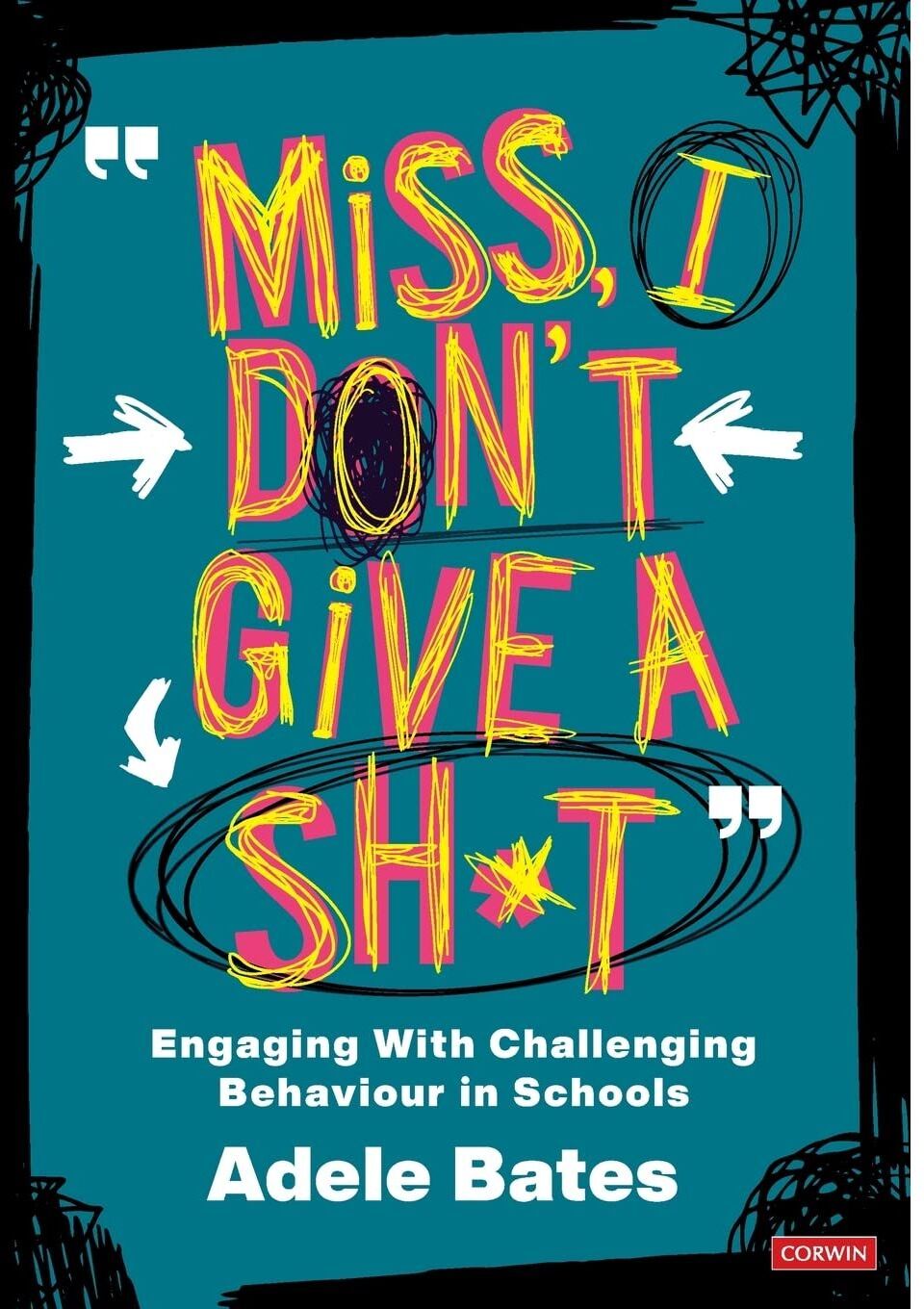
SAGE Publications Miss, I dont give a sh*t : Engaging with challenging behaviour in schoolsDo you want to be an inspiring teacher for everyone you teach, even the trickier cherubs in your class? Or maybe you just want to get through a lesson without a desk flying at you or a blazer being set alight? In this down-to-earth book Adele Bates shares practical approaches, strategies and tips from the classroom on how to help pupils with behavioural needs thrive with their education. Packed full of real-life classroom scenarios, student voice and relevant theory, every chapter offers an Action Box helping you to implement these strategies – next lesson, next week and long term. From relationship building and teaching self-regulation, to fostering inclusivity, paying attention to your own self-care and schoolwide approaches, Adele Bates unpicks some of the most difficult aspects of being a teacher and empowers you to grow as a confident classroom professional.15,69 £*Shipping: 2,99 £Secure redirect to the provider
-
Macmillan The Storyteller's Secret: From Ted Speakers To Business Legends Why Some Ideas Catch On And Others DontHow did a Venice Beach T-shirt vendor become television's most successful producer? How did an entrepreneur who started in a garage create the most iconic product launches in business history? How did a timid pastor's son overcome a paralyzing fear of public speaking to captivate sold-out crowds at Yankee Stadium; twice? How did a human rights attorney earn TED's longest standing ovation; and how did a Facebook executive launch a movement to encourage millions of women to 'lean in'? They told brilliant stories. In The Storyteller's Secret: From TED Speakers to Business Legends; Why Some Ideas Catch on and Others Don't; keynote speaker; bestselling author; and communication expert Carmine Gallo reveals the keys to telling powerful stories that inspire; motivate; educate; build brands; launch movements; and change lives. The New York Times has called a well-told story 'a strategic tool with irresistible power' - the proof lies in the success stories of 50 icons; leaders; and legends featured in The Storyteller's Secret: entrepreneurs like Richard Branson; Sara Blakely; Elon Musk; Steve Jobs; and Sheryl Sandberg; spellbinding speakers like Dr. Martin Luther King; Jr.; Bryan Stevenson; and Malala Yousafzai; and business leaders behind famous brands such as Starbucks; Southwest Airlines; Wynn Resorts; Whole Foods; and Pixar. Whether your goal is to educate; fundraise; inspire teams; build an award-winning culture; or to deliver memorable presentations; a story is your most valuable asset and your competitive advantage. In The Storyteller's Secret; Gallo explains why the brain is hardwired to love stories - especially rags-to-riches stories - and how the latest science can help you craft a persuasive narrative that wins hearts and minds. 'The art of storytelling can be used to drive change;' says billionaire entrepreneur Richard Branson. And since the next decade will see the most change our civilization has ever known; your story will radically transform your business; your life; and the lives of those you touch. Ideas that catch on are wrapped in story. Your story can change the world. Isn't it time you shared yours?4,95 £*Shipping: 1,99 £Secure redirect to the provider
-
Transworld Publishers Ltd Books about parenting, The Unmumsy Mum A-Z - An Inexpert Guide to Parenting by Sarah Turner (Parenting Guide Book)From bestselling author and massively popular blogger The Unmumsy Mum comes this hilarious, irreverent and searingly candid compendium of parenting experiences. With entries including D is for Desperation, F is for Fish Fingers, S is for Supermum and V is for Vagina, it is safe to say this is not your average A-Z. This book wont tell you what sort of parent you should or should not be; instead, it offers a refreshingly honest account of what being a mum to three young children is really like and the surprising lessons that have been learned along the way. If you feel as though you are not measuring up or are struggling to cherish every moment, Sarah tales from the thick of it will reassure and resonate with you. Above all, her commitment to telling the truth, the whole truth and nothing but the truth will make you laugh out loud and remind you that you are, in fact, doing a great job. What readers are saying: For all parents out there, this is a must read. Absolutely hilarious and so true to life. 100 recommend. Makes me smile and actually keeps me sane as it is so easy to relate to. It made me laugh Sleeping through, it made me cry Xmas and it made me feel better about the times I think I am getting it wrong.1,99 £*Shipping: 1,99 £Secure redirect to the provider
-
When do you use "dont" in French?
"Dont" is used in French to indicate possession or to replace the preposition "de" followed by a noun. It is used when the noun being replaced is the object of the verb in the relative clause. For example, "La fille dont j'ai parlé" (The girl I talked about) or "Le livre dont tu as besoin" (The book you need). **
-
Is there a difference between dont and duquel?
Yes, there is a difference between "dont" and "duquel" in French. "Dont" is used to indicate possession or relationship and is equivalent to "whose" or "of which" in English. For example, "le livre dont je t'ai parlé" means "the book that I told you about." On the other hand, "duquel" is a relative pronoun that is used to refer to a specific noun with a preposition, such as "le livre duquel je t'ai parlé" meaning "the book about which I told you." So, while both words are used to introduce relative clauses, they are used in different contexts and have different meanings. **
-
Which French relative pronouns are there: lequel or dont?
The French relative pronouns "lequel" and "dont" both serve different purposes. "Lequel" is used to refer to a specific noun and has different forms depending on the gender and number of the noun it refers to. On the other hand, "dont" is used to indicate possession or to introduce a relative clause with verbs that require the preposition "de." Both pronouns are important for constructing complex sentences and adding specificity to the language. **
-
What is the difference between "dont" and "duquel" in French?
In French, "dont" and "duquel" are both relative pronouns used to introduce a clause that provides additional information about a noun. However, "dont" is used to replace "de + qui/que" and is used when the main verb requires the preposition "de." On the other hand, "duquel" is used to replace "de + lequel/laquelle/lesquels/lesquelles" and is used when the main verb requires the preposition "de" and the noun is masculine singular or plural. In summary, "dont" is used to replace "de + qui/que" and "duquel" is used to replace "de + lequel/laquelle/lesquels/lesquelles." **
Similar search terms for Dont
-
Scribe UK No-Drama Discipline: the bestselling parenting guide to nurturing your child's developing mind (Mindful Parenting)The pioneering experts behind the bestselling The Whole-Brain Child now explore the ultimate child-raising challenge: discipline. A breakfast bowl gets thrown across the kitchen, splattering milk and cereal all over the wall. Or one of your kids threatens a younger sibling. Or you get a call from the headteacher’s office for the third time this month. What do you do? No-Drama Discipline provides an effective, compassionate road map for dealing with such tantrums, tensions, and tears – without causing a scene. Based on recent discoveries about the brain that give us deep insights into the children we care for, what they need, and how to discipline them in ways that foster optimal development, this book offers a ‘relational’ approach that builds on children’s innate desire to please their parents and get along well with others. Complete with candid stories and playful illustrations that bring the authors’ suggestions to life, No-Drama Discipline presents clear messages in a practical and inviting format. Using these techniques, you can discipline your children in a way that’s high on relationship-building, high on respect, and low on drama and conflict. As a result, your life as a parent will be easier, and your parenting will become more effective. And more importantly, you’ll create connections in your children’s brains to build emotional and social skills that will serve them now and throughout their entire life – all while strengthening your relationship with them.5,99 £*Shipping: 2,99 £Secure redirect to the provider
-
Jessica Kingsley Publishers The Quick Guide to Therapeutic Parenting: A Visual Introduction (Therapeutic Parenting Books) by Sarah NaishTherapeutic parenting is not your usual parenting style. It's a special, specific way to raise kids who have experienced trauma in their past, and requires a lot of commitment and determination - this is about far more than love and care.But where do you start?This book is the ideal first step for anyone who wants to understand how therapeutic parenting works. It offers simple summaries of the key ideas behind it, fully illustrated throughout with informative cartoons and graphics. Over 40 different issues are covered, from dysregulation and fear, to setting boundaries and parenting in the midst of trauma.The perfect introduction for new therapeutic parents, family members, teachers or other adults who need to help support you and your child, this Quick Guide will also be a source of inspiration for more experienced parents.13,20 £*Shipping: 2,99 £Secure redirect to the provider
-
Scribe UK Parenting from the Inside Out: how a deeper self-understanding can help you raise children who thrive (Mindful Parenting)An updated edition of the parenting classic Have you ever thought: ‘I can’t believe I just said to my child the very thing my parents used to say to me! Am I destined to repeat the mistakes of my parents?’ In Parenting from the Inside Out, child psychiatrist Daniel J. Siegel and early-childhood expert Mary Hartzell explore how our childhood experiences shape the way we parent. Drawing on stunning new findings in neurobiology and attachment research, they explain how interpersonal relationships affect the development of the brain, and offer a step-by-step approach to forming a deeper understanding of our life stories, which will help us raise compassionate and resilient children. Combining Siegel’s cutting-edge neuroscience research with Hartzell’s 30 years of experience as a child-development specialist and parent educator, Parenting from the Inside Out guides us through creating the necessary foundations for secure and loving relationships with our children. This tenth-anniversary edition includes a new preface by the authors and incorporates the latest research from the field.7,99 £*Shipping: 2,99 £Secure redirect to the provider
-
StayWell Wonder Arms Workout Fitness Machine Perfect Fitness Gift For Home & Travel Enthusiasts Wonder Arms Workout Fitness Machine Perfect Fitness Gift For Home & Travel EnthusiastsElevate Your Fitness Routine with the Wonder Arms Workout Fitness MachineAchieve your fitness goals effortlessly with the Wonder Arms Workout Fitness Machine, the ultimate solution for sculpting your arms, shoulders, and back. Designed for...59,97 $*Shipping: 0,00 $Secure redirect to the provider
-
Which of them (de laquelle, duquel or dont) is grammatically correct?
The correct choice depends on the gender and number of the noun it refers to. "De laquelle" is used for feminine singular nouns, "duquel" is used for masculine singular nouns, and "dont" is used for both masculine and feminine singular or plural nouns. It's important to match the relative pronoun with the noun it refers to in terms of gender and number. **
-
Can you help me with the French relative pronouns lequel and dont?
Of course! The relative pronoun "lequel" is used to refer to a previously mentioned noun and can be masculine, feminine, singular, or plural. It has different forms depending on the gender and number of the noun it refers to. On the other hand, "dont" is used to replace "de + noun" and is used to indicate possession or relationship. It is used to connect a main clause to a subordinate clause. I can provide more specific examples or help with any other questions you may have about these relative pronouns. **
-
When do we use ce qui, ce que, qui, que, dont, and lequel?
We use "ce qui" when the subject of the verb is unknown or unspecified. "Ce que" is used when the object of the verb is unknown or unspecified. "Qui" is used as the subject of the verb, while "que" is used as the direct object of the verb. "Dont" is used to indicate possession or relationship, and "lequel" is used to refer to a specific noun that has been previously mentioned. **
-
Do fashion designers have to travel?
Yes, fashion designers often have to travel for various reasons. They may need to attend fashion shows, visit fabric suppliers, meet with manufacturers, or seek inspiration from different cultures and locations. Traveling allows them to stay updated on the latest trends, connect with industry professionals, and gain new perspectives that can influence their designs. Overall, travel is an important aspect of a fashion designer's career. **
* All prices are inclusive of VAT and, if applicable, plus shipping costs. The offer information is based on the details provided by the respective shop and is updated through automated processes. Real-time updates do not occur, so deviations can occur in individual cases. ** Note: Parts of this content were created by AI.